
Our new improved embed code for embedding the Pipe recorder clients in your website or web apps is now available in beta, details in the blog post.
Every update to the Pipe platform: new features, improvements and fixes.
Our new improved embed code for embedding the Pipe recorder clients in your website or web apps is now available in beta, details in the blog post.
Two times a year we reserve one week for fixing or improving stuff that piles up in our TODO bucket.
Here’s what we did during the last week of August:
From the Pipe account area you can now :
The blog post has more information about why this change is great.
We’ve updated the Pipe account area to show the following information in the list of recordings:
The information is shown for both the source (recording streamed or uploaded by the user) and for the final .mp4 recording (after being transcoded by Pipe).
This information will make it easier to identify what kind of recordings one receives from the users, the initial audio and video codecs, the number of audio channels and sample rate (directly influences quality) and whether or not transcoding audio/video is needed.
Over the last 2 weeks, we’ve done a few changes in light of GDPR coming into effect tomorrow the 25th of May.
Changes that help you with your compliance:
Changes that touch on our GDPR compliance:
As promised on the 25th of April we’ve removed some data from our webhooks, data that’s unrelated to the event for which we’re sending the webhook.The documentation and test webhook data have been updated to reflect the changes.
This move will (also) enable us to roll out a new Do Not Store Personal Metadata feature similar to the Do Not Store Files feature.
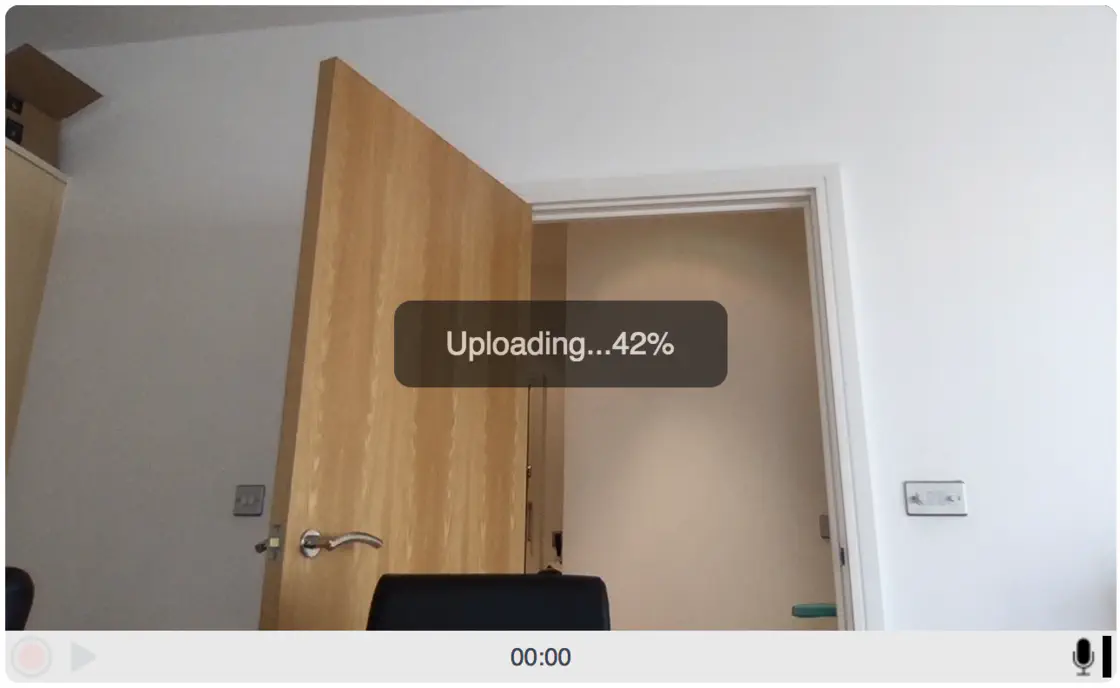
In a subtle move to make the HTML5 recorder a lot more intuitive on slow (upload) Internet connections we’ve managed to add a percentage indicator during video uploading:
video_converted which triggers when the recording has finished convertingvideo_copied_pipe_s3 which triggers when the recording has finished copying to our S3 storageAlong with these 2 new webhooks the old video_transcoded webhook is being deprecated (it will still fire if you have it setup currently, but you’ll not be able to add new ones)
We’ve also added md5 and sha-1 checksums to all our storage webhooks:
video_copied_pipe_s3 (new)video_copied_ftpvideo_copied_s3video_copied_dboxThe documentation has also been updated to reflect the changes and you can read more about the updates in the blogpost.

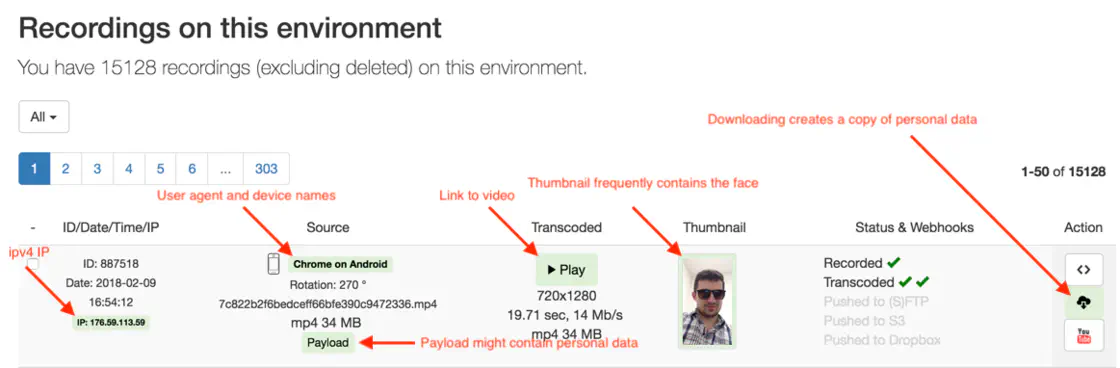
The list of videos from the Pipe account area will now highlight personal data collected by us as data processors for you (the data controllers).
This will help you, the data controller, with both awareness and GDPR compliance.
More #GDPR changes! Pipe accounts can now be deleted!
The process instantly deletes data related to:
1. account data:
2. recordings:
*Deleting recording files stored by us might take up to 15 minutes to be removed as they enter a deletion queue.
3. email lists:
What we do not delete:
The delete option is available to all accounts. Accounts with an active paid subscription must cancel their subscription 1st.
After you delete your account you can sign up again with the same email.
In light of GDPR coming into effect May 25th we’ve made a few changes to make all the data we collect (as processors in GDPR speak) for our clients more easily available to them (as controllers).
Updates to our REST API:
GET https://api.addpipe.com/video/all and GET https://api.addpipe.com/video/xyz will also return the public IPv4 of the device used to record the video.Updates to our webhooks:
video_recorded webhook will also POST info about the:Updates to the Pipe account area:
We’ve also revised our documentation to correctly reflect the data sent through webhooks and available through the REST API.
You can now sign up for Pipe using a Google Account https://dashboard.addpipe.com/signup
We’ve rolled out the ability to upload audio and video files from desktop browsers.
We’re currently allowing users to upload the following video file formats:
And the following audio formats:
You can turn on the feature (for new embed codes) from the Pipe account area or by manually adding dup:1 to your flashvars JS object in the existing embed codes.
The feature is now available in beta to all trial and PRO accounts
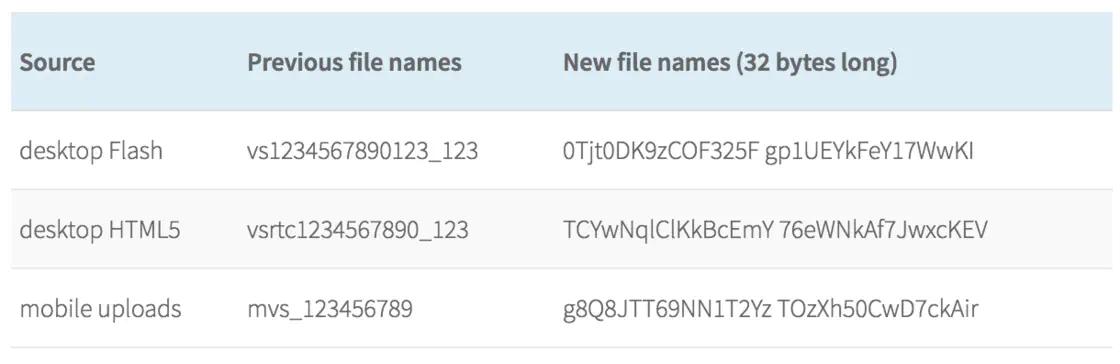
Starting today all video and snapshot file names will consist of a 32 character long string + extension.
We’ve also switched our storage to a new EU based S3 bucket (eu1-addpipe.s3.eu-central-1.amazonaws.com) located in Frankfurt. We’ve done this to consolidate our infrastructure in Europe as we prepare to open a new region in the US.
More details in the blog post .
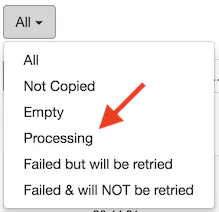
Thanks to recent backend changes in our platform we can now show the following information in the client area:
the list of videos currently being copied, converted or being pushed to our/your storage:
the videos which have been recovered by us as the result of an unexpected disconnection (OS/browser crash) are marked with an (R)
In light of recent fixes to the audio subsystem in Chrome 63 we’ve upped the minimum Chrome version for our HTML5 desktop video recorder to 63.
Next year we’ll be adding video recording, processing and storage regions (EU, US, CA, etc.).
In light of this change we’ve updated the onSaveOk, onUploadDone and onVideoUploadSuccess functions (they’re part of our JS Events API on desktop and mobile) with a new location parameter which contains the subdomain of the S3 bucket where the final .mp4 video and .jpg snapshot will be stored by us.
It’s value is currently addpipevideos.s3.amazonaws.com . Once we introduce regions the new location parameter will take different values depending on the region.
Pipe can now correctly record, process and store FullHD, 2K and 4K UHD/DC videos.

Quick resolutions overview:
You can read more about it in the blogpost
You asked for it, we listened, so here you go. Pipe can now be used to record audio only.
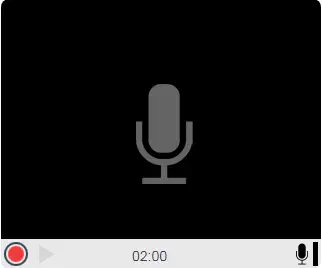
The new feature can easily be enabled directly from the Pipe account area from the Embed Recorder page or directly from the embed code by adding the new ao parameter to the flashvars object and setting this new parameter to 1.
For more information on audio only recording you can view the blogpost.
We’ve added support for us-east-2 Amazon S3 region
We’ve fixed the issue that caused the Pipe recorder to still access the camera after being removed from the DOM.
None of us likes when those pesky errors show up, but they are there for a reason and they help us figure out what went wrong.
We are now detecting disconnect errors and webcam already in use errors in the HTML 5 recorder
You can now prevent mobile users from uploading pre-recorded videos. The option is available in your Pipe account area when generating an embed code:
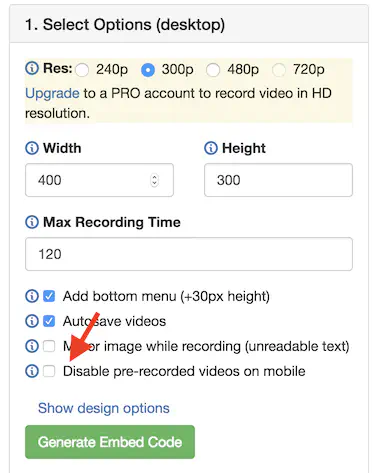
Works on iOS 10.3+ and Android.
onRecorderInit() has now been added to the JS Events API of our 2nd generation HTML5 video recording client. It was missing.
We finally got to push to production important architectural changes we’ve been planning and working on for a while.
Thanks to these changes: